La Araucanía Region · 1,400–1,460 m a.s.l.
🥾 Trekking info
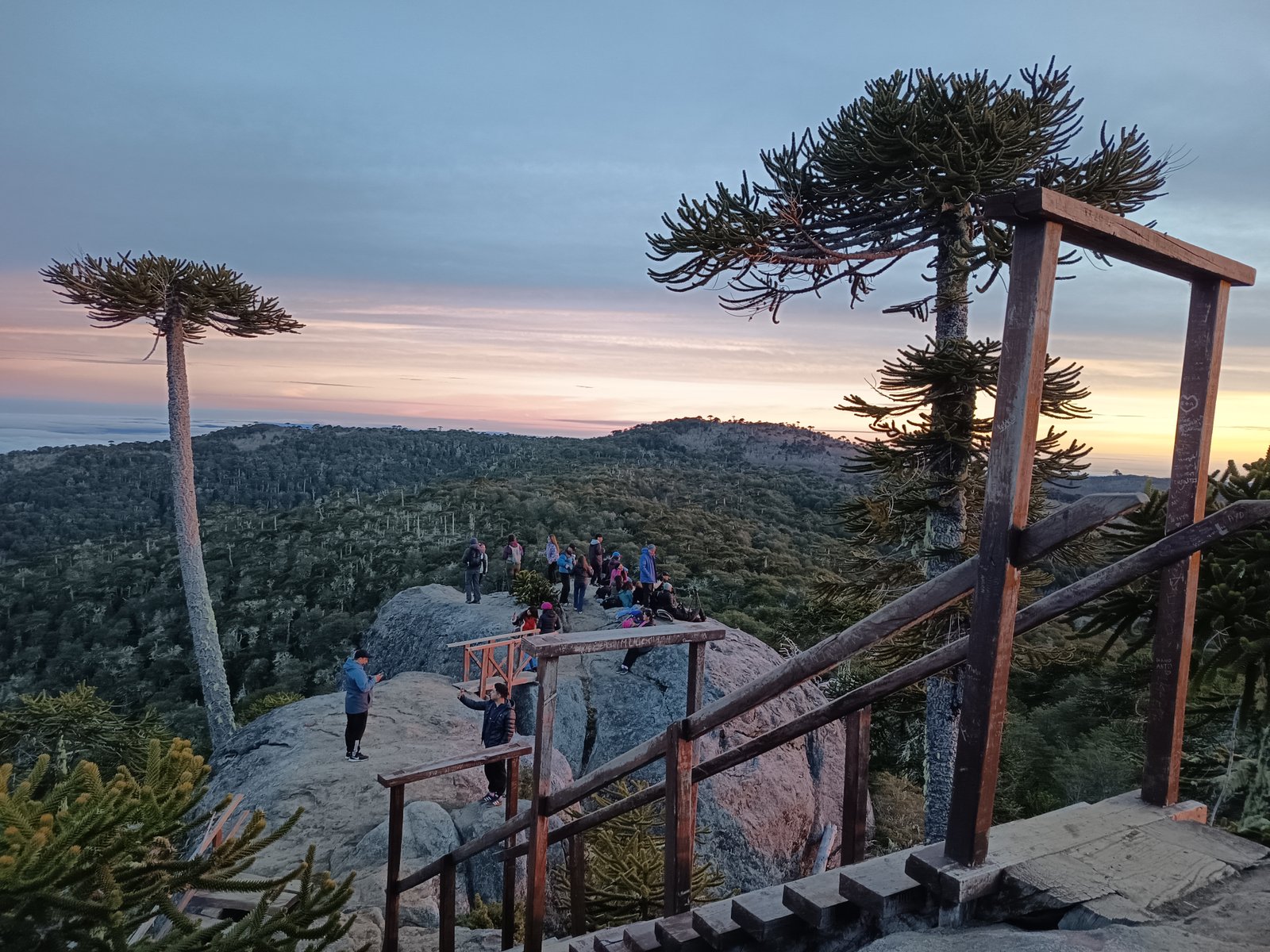
Piedra del Águila route. Distance: 8 km (round trip). Technical difficulty: Moderate. Maximum altitude: 1,425 m a.s.l. Route type: Out-and-back, same trail. Elevation gain: +372 -372.
🌿 Flora, fauna & fungi
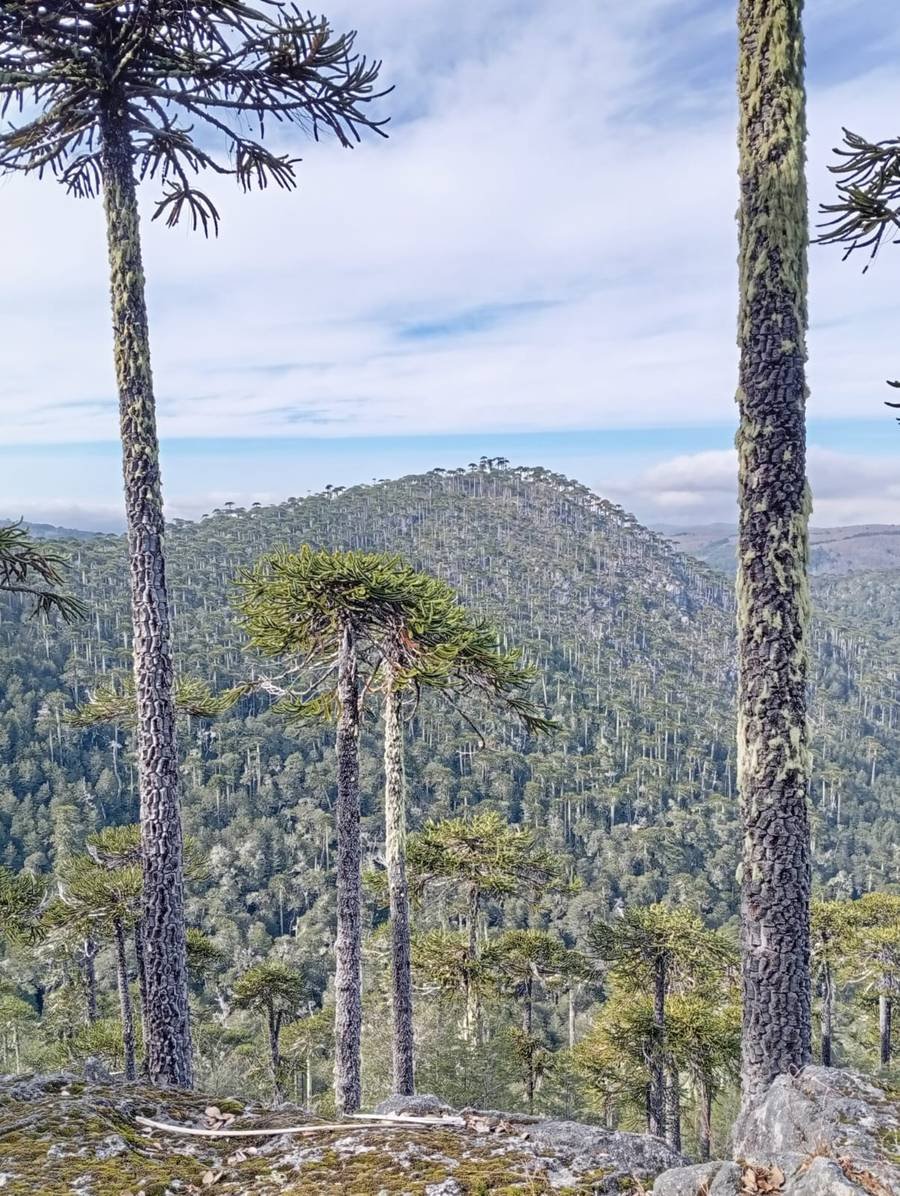
This relict ecosystem is home to a wide diversity of native flora, wildlife and fungi, species adapted to the cold, humid, high-altitude conditions of this environment. Main trees: the araucaria (Araucaria araucana), coigüe, roble, lenga and ñire stand out. Understory: wild orchids, alstroemerias and various plant species adapted to local conditions can be found here, including some insectivorous plants. Lichens: due to the high humidity levels, araucaria branches often carry abundant hanging lichen, adding to the richness and uniqueness of the landscape. Mammals: the ecosystem is home to species such as Darwin's fox, the pudú, puma and güiña, some of which face varying degrees of conservation threat. Birds: species that can be spotted include the Magellanic woodpecker, chucao tapaculo, churrín and choroy parakeet. Amphibians and reptiles: there is also a presence of species associated with high-altitude and wetland environments, some of them endemic. Fungi: a wide diversity of decomposer and mycorrhizal fungi stand out, essential to the balance and functioning of the temperate forest, as they play a role in breaking down organic matter and interacting with tree roots. Peak season: fungi tend to be most abundant in fall and winter, especially after rainfall, when a greater abundance, diversity and variety of shapes and colors can be observed.
💡 Route tips
We recommend hiking this trail with company, especially if you're not familiar with the route or the terrain conditions. - Footwear: Wear proper trekking shoes, ideally with good grip and a non-slip sole. - Sun protection: Bring a hat, sunglasses, and sunscreen. Sun exposure can be intense even on cloudy days. - Hydration and food: Bring at least 2 liters of water per person. We recommend packing ready-to-eat, easy-to-carry food that provides energy during the activity. - Clothing: Wear appropriate mountain clothing plus an extra warm layer, since temperatures can change along the route. - Safety gear: We recommend trekking poles, a fully charged phone and, if possible, a power bank. A headlamp or flashlight, a small first-aid kit, and basic personal items are also important. - Fitness: Keep in mind that the hike to the lookout/lagoon involves a significant level of physical demand. Stay hydrated, take breaks when needed, and always move at your own pace, respecting your physical limits. - Planning: Before starting the hike, let someone you trust know your itinerary, and check the weather forecast and trail conditions. - Environmental care: Respect the flora, fauna and trail signage. Don't leave any trash behind, and be sure to carry out everything you bring in.
📍 Destination area
UPCOMING DATES